
Ingredients
[vc_row type=”in_container” full_screen_row_position=”middle” column_margin=”default” column_direction=”default” column_direction_tablet=”default” column_direction_phone=”default” scene_position=”center” top_padding=”60″ bottom_padding=”60″ text_color=”dark” text_align=”left” row_border_radius=”none” row_border_radius_applies=”bg” disable_element=”yes” overlay_strength=”0.3″ gradient_direction=”left_to_right” shape_divider_position=”bottom” bg_image_animation=”none” shape_type=””][vc_column column_padding=”no-extra-padding” column_padding_tablet=”inherit” column_padding_phone=”inherit” column_padding_position=”all” column_element_spacing=”default” background_color_opacity=”1″ background_hover_color_opacity=”1″ column_shadow=”none” column_border_radius=”none” column_link_target=”_self” gradient_direction=”left_to_right” overlay_strength=”0.3″ width=”1/1″ tablet_width_inherit=”default” tablet_text_alignment=”default” phone_text_alignment=”default” bg_image_animation=”none” border_type=”simple” column_border_width=”none” column_border_style=”solid”][vc_column_text]
Science & Innovation
“We touch people’s hearts through our high-quality and effective skincare products”
Our gratitude and give back to our community
[/vc_column_text][/vc_column][/vc_row][vc_row type=”in_container” full_screen_row_position=”middle” column_margin=”default” column_direction=”default” column_direction_tablet=”default” column_direction_phone=”default” scene_position=”center” top_padding=”60″ bottom_padding=”60″ text_color=”dark” text_align=”left” row_border_radius=”none” row_border_radius_applies=”bg” disable_element=”yes” overlay_strength=”0.3″ gradient_direction=”left_to_right” shape_divider_position=”bottom” bg_image_animation=”none” shape_type=””][vc_column column_padding=”no-extra-padding” column_padding_tablet=”inherit” column_padding_phone=”inherit” column_padding_position=”all” column_element_spacing=”default” background_color_opacity=”1″ background_hover_color_opacity=”1″ column_shadow=”none” column_border_radius=”none” column_link_target=”_self” gradient_direction=”left_to_right” overlay_strength=”0.3″ width=”1/1″ tablet_width_inherit=”default” tablet_text_alignment=”default” phone_text_alignment=”default” bg_image_animation=”none” border_type=”simple” column_border_width=”none” column_border_style=”solid”][vc_column_text]
INGREDIANTS
Become our exclusive member, to be a part of the Monaesi world
[/vc_column_text][vc_row_inner column_margin=”default” column_direction=”default” column_direction_tablet=”default” column_direction_phone=”default” text_align=”left”][vc_column_inner column_padding=”no-extra-padding” column_padding_tablet=”inherit” column_padding_phone=”inherit” column_padding_position=”all” column_element_spacing=”default” background_color_opacity=”1″ background_hover_color_opacity=”1″ column_shadow=”none” column_border_radius=”none” column_link_target=”_self” gradient_direction=”left_to_right” overlay_strength=”0.3″ width=”1/2″ tablet_width_inherit=”default” bg_image_animation=”none” border_type=”simple” column_border_width=”none” column_border_style=”solid”]
Pomegranate, Fig, Mulberry, and Ginkgo
[/vc_column_text][image_with_animation image_url=”285″ animation=”Fade In” hover_animation=”none” alignment=”” border_radius=”none” box_shadow=”none” image_loading=”default” max_width=”100%” max_width_mobile=”default”][vc_column_text]You are what you eat. Beautiful skin starts with nourishment from within. Why not feed your skin all the goodness of the fruits.
Pomegranate, fig, mulberry, and ginkgo have been traditionally been used in Asian countries to enhance beauty and are known to result in younger-looking, soft, even-toned glowing skin when applied onto the skin.
Pomegranate is a good source of vitamin C, B5 (pantothenic acid), potassium, and polyphenols. They are abundant in polyphenols, ellagitannins, and punicalagins. These polyphenols are responsible for antioxidant activity in pomegranate along with Vitamin C. Polyphenols can also help reverse signs of aging like sun spots, fine lines, and wrinkles.1,4 Pomegranate is also known for its ability to improve skin tone resulting in a natural glow and offering protection against UV-induced damage to the skin.2,3
Figs are rich in Vitamin C, calcium, magnesium, iron, potassium, and fiber and a good source of antioxidant vitamins A and K. The high Vitamin C content in figs confers the figs with the properties of skin rejuvenation, skin brightening and are effective in reducing sun spots, scarring.4 Several flavonoid compounds, anthocyanins, phytosterols have been characterized in fig fruits which help balance sebum production and maintain water balance resulting in a hydrated soft, and supple skin besides protecting and repairing the skin from damage caused due to UV light.4
Mulberry alba was effective for anti-oxidation and melanin inhibition suggesting this medicinal plant might be used as a good natural ingredient for cosmetics. Because of its ability to inhibit melanin, it is known for its ability to reduce age spots and treat hyperpigmentation. 6
Ginkgo biloba is also considered a vasodilator and has actions to improve blood circulation. Both the ginkgo nuts and the leaves have indicated very high anti-oxidant levels due to the high concentration of vitamins C and E. The nuts are a rich source of amino acids, fatty acids, sugars, and vitamins. Ginkgo biloba has been proven to improve the skin barrier function and elasticity of the skin.7
References
- Polyphenols: Skin Photoprotection and Inhibition of Photocarcinogenesis. Mini Rev Med Chem. 2011 December 1; 11(14): 1200–1215.
- Beneficial effects of dried pomegranate juice concentrated powder on ultraviolet B-induced skin photoaging in hairless mice. Experimental and Therapeutic Medicine 14: 1023-1036, 2017.
- Pomegranate Juice and extract consumption increases the Resistance to UVB-induced erythema and changes the Skin Microbiome in Healthy Women: a Randomized controlled trial. Nature-Scientific reports, 2019) 9:14528.
- Phenolic-rich Pomegranate Peel Extract: In Vitro, Cellular, and In Vivo Activities for Skin Hyperpigmentation Treatment. Plant Medicine, 2020, July 86 (11),749-759.
- Traditional uses, phytochemistry, and pharmacology of Ficus carica: A review. Pharmaceutical Biology, Volume 52,2014-Issue11.
- Phytochemistry, pharmacology, and clinical trials of Morus alba. Chin J Nat Med,2016,Jan;14(1),17-30.
- Synergistic effects of green tea and ginkgo biloba extracts on the improvement of skin barrier function and elasticity. J Drug Dermatol,2014,Sep13 (9),1092-7.
[/vc_column_text][/vc_column][vc_column column_padding=”no-extra-padding” column_padding_tablet=”inherit” column_padding_phone=”inherit” column_padding_position=”all” column_element_spacing=”default” background_color_opacity=”1″ background_hover_color_opacity=”1″ column_shadow=”none” column_border_radius=”none” column_link_target=”_self” gradient_direction=”left_to_right” overlay_strength=”0.3″ width=”1/1″ tablet_width_inherit=”default” tablet_text_alignment=”default” phone_text_alignment=”default” bg_image_animation=”none” border_type=”simple” column_border_width=”none” column_border_style=”solid”][vc_row_inner equal_height=”yes” content_placement=”middle” column_margin=”default” column_direction=”default” column_direction_tablet=”default” column_direction_phone=”default” text_align=”left”][vc_column_inner column_padding=”no-extra-padding” column_padding_tablet=”inherit” column_padding_phone=”inherit” column_padding_position=”all” column_element_spacing=”default” background_color_opacity=”1″ background_hover_color_opacity=”1″ column_shadow=”none” column_border_radius=”none” column_link_target=”_self” gradient_direction=”left_to_right” overlay_strength=”0.3″ width=”1/2″ tablet_width_inherit=”default” bg_image_animation=”none” border_type=”simple” column_border_width=”none” column_border_style=”solid”][vc_column_text]
Baobab oil
[/vc_column_text][vc_column_text]The Baobab (Adansonia digitata L.Malvaceae) tree, is referred to as the ‘Tree of life’ and is used in many traditional African remedies. It is a succulent tree and absorbs water during the rainy season and stores in its vast trunk, enabling it to produce a nutrient-dense fruit in the dry season when all around is dry and arid thus gaining its name as the Tree of Life It has been used extensively as a source of food, fiber, and medicine.[/vc_column_text][/vc_column_inner][vc_column_inner column_padding=”no-extra-padding” column_padding_tablet=”inherit” column_padding_phone=”inherit” column_padding_position=”all” column_element_spacing=”default” background_color_opacity=”1″ background_hover_color_opacity=”1″ column_shadow=”none” column_border_radius=”none” column_link_target=”_self” gradient_direction=”left_to_right” overlay_strength=”0.3″ width=”1/2″ tablet_width_inherit=”default” bg_image_animation=”none” border_type=”simple” column_border_width=”none” column_border_style=”solid”][image_with_animation image_url=”287″ animation=”Fade In” hover_animation=”none” alignment=”” border_radius=”none” box_shadow=”none” image_loading=”default” max_width=”100%” max_width_mobile=”default”][/vc_column_inner][/vc_row_inner][/vc_column][/vc_row][vc_row type=”in_container” full_screen_row_position=”middle” column_margin=”default” equal_height=”yes” content_placement=”middle” column_direction=”default” column_direction_tablet=”default” column_direction_phone=”default” scene_position=”center” text_color=”dark” text_align=”left” row_border_radius=”none” row_border_radius_applies=”bg” overlay_strength=”0.3″ gradient_direction=”left_to_right” shape_divider_position=”bottom” bg_image_animation=”none” shape_type=””][vc_column column_padding=”no-extra-padding” column_padding_tablet=”inherit” column_padding_phone=”inherit” column_padding_position=”all” column_element_spacing=”default” background_color_opacity=”1″ background_hover_color_opacity=”1″ column_shadow=”none” column_border_radius=”none” column_link_target=”_self” gradient_direction=”left_to_right” overlay_strength=”0.3″ width=”1/2″ tablet_width_inherit=”default” tablet_text_alignment=”default” phone_text_alignment=”default” bg_image_animation=”none” border_type=”simple” column_border_width=”none” column_border_style=”solid”][image_with_animation image_url=”288″ animation=”Fade In” hover_animation=”none” alignment=”” border_radius=”none” box_shadow=”none” image_loading=”default” max_width=”100%” max_width_mobile=”default”][/vc_column][vc_column column_padding=”no-extra-padding” column_padding_tablet=”inherit” column_padding_phone=”inherit” column_padding_position=”all” column_element_spacing=”default” background_color_opacity=”1″ background_hover_color_opacity=”1″ column_shadow=”none” column_border_radius=”none” column_link_target=”_self” gradient_direction=”left_to_right” overlay_strength=”0.3″ width=”1/2″ tablet_width_inherit=”default” tablet_text_alignment=”default” phone_text_alignment=”default” bg_image_animation=”none” border_type=”simple” column_border_width=”none” column_border_style=”solid”][vc_column_text]The seed oil extracted from the baobab fruit pulp is popularly used in the cosmetics industry.1 The seed oil is loaded with ingredients that are good-for-the-skin: it contains skin regenerating vitamin A, antioxidant vitamin E, and vitamin D3 that helps with calcium absorption, flavonoids, phytosterols, amino acids, fatty acids, vitamins, and minerals.[/vc_column_text][/vc_column][/vc_row][vc_row type=”in_container” full_screen_row_position=”middle” column_margin=”default” column_direction=”default” column_direction_tablet=”default” column_direction_phone=”default” scene_position=”center” text_color=”dark” text_align=”left” row_border_radius=”none” row_border_radius_applies=”bg” overlay_strength=”0.3″ gradient_direction=”left_to_right” shape_divider_position=”bottom” bg_image_animation=”none”][vc_column column_padding=”no-extra-padding” column_padding_tablet=”inherit” column_padding_phone=”inherit” column_padding_position=”all” column_element_spacing=”default” background_color_opacity=”1″ background_hover_color_opacity=”1″ column_shadow=”none” column_border_radius=”none” column_link_target=”_self” gradient_direction=”left_to_right” overlay_strength=”0.3″ width=”1/1″ tablet_width_inherit=”default” tablet_text_alignment=”default” phone_text_alignment=”default” bg_image_animation=”none” border_type=”simple” column_border_width=”none” column_border_style=”solid”][vc_column_text]The seeds are a source of significant quantities of lysine, thiamine, calcium, and iron. It’s rich in nourishing fatty acids oleic (30-40%), linoleic (24-34%), and palmitic (18-30%).2 About 33% of the seed content is an oil with oleic and linoleic acids as the major fatty acids followed by palmitic and linoleic acid. The high content of linoleic and oleic acids is known to soften the skin and restore and moisturize the epidermis. In addition, the fatty acids regenerate epithelial tissues which render the seed oil a very good carrier oil of value to the cosmetic industry.3,4
Clinical research shows that the omega fatty acids in baobab oil have several health benefits for the skin. They can:3,4
- moisturize
- help prevent water loss from the skin
- soften skin
- improve skin texture
- improve skin elasticity
- help repair the skin barrier
- help to heal skin faster
- reduce inflammation
Another clinical trial found that baobab oil may help improve acne in some people3. This is because it’s high in linoleic acid, a kind of omega-3 fatty acid that has anti-inflammatory properties. Omega 6 and 9 fatty acids help to retain moisture and regenerate new skin cells resulting in the healing of scar tissue. Linoleic acid is a natural component of sebum and plays a significant role in strengthening the lipid barrier of the epidermis and normalizing skin metabolism. Applying it to the problem skin can result in improved sebaceous gland function and the prevention of acne formation.3
References
- Baatile M. Komane et al, Beauty in Baobab: a pilot study of the safety and efficacy of Adansonia digitata seed oil. Revista Brasileira de Farmacognosia 27 (2017) 1–8.
- P.P Kamatau et al, An updated review of Adansonia digitata: A commercially important African tree. South African Journal of Botany, Volume 77, Issue 4, October 2011, Pages 908–919.
- SM Karandikar et al, Beneficial effect of Adansonia digitata in bronchial asthma and allergic skin disorders. Indian Med J,1965 Mar;59:69-70.
- Hussein Zeitoun et al, Skin lightening effect of natural extracts coming from Senegal botanical biodiversity.International Journal of Dermatology, November 4, 2019.
[/vc_column_text][vc_row_inner column_margin=”default” column_direction=”default” column_direction_tablet=”default” column_direction_phone=”default” text_align=”left”][vc_column_inner column_padding=”no-extra-padding” column_padding_tablet=”inherit” column_padding_phone=”inherit” column_padding_position=”all” column_element_spacing=”default” background_color_opacity=”1″ background_hover_color_opacity=”1″ column_shadow=”none” column_border_radius=”none” column_link_target=”_self” gradient_direction=”left_to_right” overlay_strength=”0.3″ width=”1/1″ tablet_width_inherit=”default” bg_image_animation=”none” border_type=”simple” column_border_width=”none” column_border_style=”solid”][vc_column_text]
Crocus chrysanthus
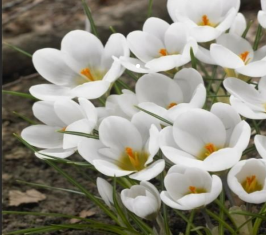
The crocus chrysanthus also known as snow crocus or golden crocus is a universal emblem of youth and rejuvenation. Being the first flowers to bloom in spring, these flowering plants are looked upon to bring joy and hope to the changing seasons. Not only Crocus chrysanthus is an emblem of youth but was proven to rejuvenate the skin. The bulb extract has been proven to reverse the aging of the skin by repairing the skin matrix itself. Crocus chrysanthus bulb extract does this by stimulating signaling between skin cells to increase collagen and elastin production via fibroblast growth factors resulting in smoother and plumper-looking skin.
Cutaneous aging is a complex and continuous biological process characterized by cellular and molecular alterations, with progressive reduction of the body’s capacity to maintain the homeostasis, senescence, and/or apoptosis of the dermal cells. Fibroblast growth factors (FGF) are regulatory proteins and play an important role in the repair and remodeling of the dermis during the skin anti-aging process by mediating the signaling pathways through binding to tyrosine kinase receptors through autophosphorylation. FGF has a relevant role in anti-aging therapy because it is related to collagen and elastin synthesis activation responsible for skin resistance and elasticity, characteristics that are diminished with skin aging. Crocus Chrysanthis signals the keratinocytes to stimulate the growth factors leading to collagen and elastin production and thus facilitates rejuvenation.[/vc_column_text][/vc_column_inner][/vc_row_inner][vc_row_inner equal_height=”yes” content_placement=”middle” column_margin=”default” column_direction=”default” column_direction_tablet=”default” column_direction_phone=”default” text_align=”left”][vc_column_inner column_padding=”no-extra-padding” column_padding_tablet=”inherit” column_padding_phone=”inherit” column_padding_position=”all” column_element_spacing=”default” background_color_opacity=”1″ background_hover_color_opacity=”1″ column_shadow=”none” column_border_radius=”none” column_link_target=”_self” gradient_direction=”left_to_right” overlay_strength=”0.3″ width=”1/2″ tablet_width_inherit=”default” bg_image_animation=”none” border_type=”simple” column_border_width=”none” column_border_style=”solid”][vc_column_text]Figure 1: Effect of an extract of crocus chrysanthus bulbs on gene expression in keratinocytes leading to the synthesis of different fibroblast growth factors. This leads to increased collagen and elastin production.[/vc_column_text][/vc_column_inner][vc_column_inner column_padding=”no-extra-padding” column_padding_tablet=”inherit” column_padding_phone=”inherit” column_padding_position=”all” column_element_spacing=”default” background_color_opacity=”1″ background_hover_color_opacity=”1″ column_shadow=”none” column_border_radius=”none” column_link_target=”_self” gradient_direction=”left_to_right” overlay_strength=”0.3″ width=”1/2″ tablet_width_inherit=”default” bg_image_animation=”none” border_type=”simple” column_border_width=”none” column_border_style=”solid”][image_with_animation image_url=”290″ animation=”Fade In” hover_animation=”none” alignment=”” border_radius=”none” box_shadow=”none” image_loading=”default” max_width=”100%” max_width_mobile=”default”][/vc_column_inner][/vc_row_inner][vc_row_inner equal_height=”yes” content_placement=”middle” column_margin=”default” column_direction=”default” column_direction_tablet=”default” column_direction_phone=”default” text_align=”left”][vc_column_inner column_padding=”no-extra-padding” column_padding_tablet=”inherit” column_padding_phone=”inherit” column_padding_position=”all” column_element_spacing=”default” background_color_opacity=”1″ background_hover_color_opacity=”1″ column_shadow=”none” column_border_radius=”none” column_link_target=”_self” gradient_direction=”left_to_right” overlay_strength=”0.3″ width=”1/2″ tablet_width_inherit=”default” bg_image_animation=”none” border_type=”simple” column_border_width=”none” column_border_style=”solid”][image_with_animation image_url=”291″ animation=”Fade In” hover_animation=”none” alignment=”” border_radius=”none” box_shadow=”none” image_loading=”default” max_width=”100%” max_width_mobile=”default”][/vc_column_inner][vc_column_inner column_padding=”no-extra-padding” column_padding_tablet=”inherit” column_padding_phone=”inherit” column_padding_position=”all” column_element_spacing=”default” background_color_opacity=”1″ background_hover_color_opacity=”1″ column_shadow=”none” column_border_radius=”none” column_link_target=”_self” gradient_direction=”left_to_right” overlay_strength=”0.3″ width=”1/2″ tablet_width_inherit=”default” bg_image_animation=”none” border_type=”simple” column_border_width=”none” column_border_style=”solid”][vc_column_text]Figure 2: Effect of Crocus chrysanthus bulb extract on collagen production. A cream ( verum) containing 0.5 % crocus bulb extract was applied to the skin and the skin was analyzed using a non-invasive two-photon microscopy method. After two weeks, an increase in collagen amount was seen in verum treated skin. The amount of collagen was significantly increased over the baseline by as much as 115% for the verum . For the placebo, an increase of 30% was found.[/vc_column_text][/vc_column_inner][/vc_row_inner][vc_row_inner equal_height=”yes” content_placement=”middle” column_margin=”default” column_direction=”default” column_direction_tablet=”default” column_direction_phone=”default” text_align=”left”][vc_column_inner column_padding=”no-extra-padding” column_padding_tablet=”inherit” column_padding_phone=”inherit” column_padding_position=”all” column_element_spacing=”default” background_color_opacity=”1″ background_hover_color_opacity=”1″ column_shadow=”none” column_border_radius=”none” column_link_target=”_self” gradient_direction=”left_to_right” overlay_strength=”0.3″ width=”1/2″ tablet_width_inherit=”default” bg_image_animation=”none” border_type=”simple” column_border_width=”none” column_border_style=”solid”][vc_column_text]Figure 3: Effect of Crocus chrysanthus bulb extract on collagen product. A cream (verum) containing 0.5 % crocus bulb extract was applied to the skin and the skin was analyzed using a non-invasive two-photon microscopy method. After two weeks, an increase in elastin amount was seen in verum treated skin. The amount of elastin was increased by 25% for the verum and slightly decreased by 7% for the placebo.[/vc_column_text][/vc_column_inner][vc_column_inner column_padding=”no-extra-padding” column_padding_tablet=”inherit” column_padding_phone=”inherit” column_padding_position=”all” column_element_spacing=”default” background_color_opacity=”1″ background_hover_color_opacity=”1″ column_shadow=”none” column_border_radius=”none” column_link_target=”_self” gradient_direction=”left_to_right” overlay_strength=”0.3″ width=”1/2″ tablet_width_inherit=”default” bg_image_animation=”none” border_type=”simple” column_border_width=”none” column_border_style=”solid”][image_with_animation image_url=”292″ animation=”Fade In” hover_animation=”none” alignment=”” border_radius=”none” box_shadow=”none” image_loading=”default” max_width=”100%” max_width_mobile=”default”][/vc_column_inner][/vc_row_inner][vc_row_inner equal_height=”yes” content_placement=”top” column_margin=”default” column_direction=”default” column_direction_tablet=”default” column_direction_phone=”default” text_align=”left”][vc_column_inner column_padding=”no-extra-padding” column_padding_tablet=”inherit” column_padding_phone=”inherit” column_padding_position=”all” column_element_spacing=”default” background_color_opacity=”1″ background_hover_color_opacity=”1″ column_shadow=”none” column_border_radius=”none” column_link_target=”_self” gradient_direction=”left_to_right” overlay_strength=”0.3″ width=”1/2″ tablet_width_inherit=”default” bg_image_animation=”none” border_type=”simple” column_border_width=”none” column_border_style=”solid”][image_with_animation image_url=”293″ animation=”Fade In” hover_animation=”none” alignment=”” border_radius=”none” box_shadow=”none” image_loading=”default” max_width=”100%” max_width_mobile=”default”][/vc_column_inner][vc_column_inner column_padding=”no-extra-padding” column_padding_tablet=”inherit” column_padding_phone=”inherit” column_padding_position=”all” column_element_spacing=”default” background_color_opacity=”1″ background_hover_color_opacity=”1″ column_shadow=”none” column_border_radius=”none” column_link_target=”_self” gradient_direction=”left_to_right” overlay_strength=”0.3″ width=”1/2″ tablet_width_inherit=”default” bg_image_animation=”none” border_type=”simple” column_border_width=”none” column_border_style=”solid”][vc_column_text]Figure 4: Increase in skin firmness compared to the beginning of the study and the untreated area. Cream with 2% of an extract of crocus bulbs and the control cream without extract (placebo cream) was applied twice daily over four weeks. Already after two weeks’ application, skin firmness was found to improve significantly compared to the value of placebo-treated skin.
References
- Rousilândia de Araújo etal. Fibroblast Growth Factors: A Controlling Mechanism of Skin Aging. Skin Pharmacol Physiol 2019;32:275–282.
- Go khan Zengin et al. A comprehensive appraisal on Crocus chrysanthus (Herb.) Herb. flower extracts with HPLC-MS/MS profiles, antioxidant and enzyme inhibitory properties. J Pharm Biomed Anal, 2019 Feb 5;164:581-589.
- Ryan R. Driskell et al. Distinct fibroblast lineages determine dermal architecture in skin development and repair. Nature. 2013 December 12; 504(7479): 277–281.
- Quan T, Shao Y, He T, Voorhees JJ, Fisher GJ. Reduced expression of connective tissue growth factor (CTGF/CCN2) mediates collagen loss in chronologically aged human skin. J Invest Dermatol. 2010;130:415-24.
- Pascual G et al. Down-regulation of lysyl oxidase-like in aging and venous insufficiency. Histol.Histopathol. 2008;23:179-86.
- Huang P, et al. Keratinocyte Microvesicles Regulate the Expression of Multiple Genes in Dermal Fibroblasts. J Invest Dermatol. 2015;135:3051-9.
- Daniel Schmid, Riikka Sacher, Esther Belser and Fred Zülli. Stimulation of growth factor communication between epidermis and dermis by Crocus chrysanthus bulb extract, January 2012Agro Food Industry Hi Tech 23(1):33 36 (Mibelle Biochemistry, Switzerland June 2012.
[/vc_column_text][/vc_column_inner][/vc_row_inner][vc_row_inner column_margin=”default” column_direction=”default” column_direction_tablet=”default” column_direction_phone=”default” text_align=”left”][vc_column_inner column_padding=”no-extra-padding” column_padding_tablet=”inherit” column_padding_phone=”inherit” column_padding_position=”all” column_element_spacing=”default” background_color_opacity=”1″ background_hover_color_opacity=”1″ column_shadow=”none” column_border_radius=”none” column_link_target=”_self” gradient_direction=”left_to_right” overlay_strength=”0.3″ width=”1/1″ tablet_width_inherit=”default” bg_image_animation=”none” border_type=”simple” column_border_width=”none” column_border_style=”solid”][vc_column_text]
Hedychium coronarium
[/vc_column_text][image_with_animation image_url=”294″ animation=”Fade In” hover_animation=”none” alignment=”” border_radius=”none” box_shadow=”none” image_loading=”default” max_width=”100%” max_width_mobile=”default”][vc_column_text]Hedychium coronarium is native to the Eastern Himalayas of India (Sikkim and Tripura),
Bangladesh, Nepal, Bhutan, Myanmar and Thailand, southern China, eastern Taiwan in the
East. It is also called as the white garland-lily or white ginger lily, butterfly lily and is a perennial flowering plant in the ginger family Zingiberaceae. 1
The genus Hedychium itself (Zingiberaceae family) comprises 93 species that are distributed worldwide. The extract made of Hydechium ( flowers, root, leaves) has been used in traditional medicine in several counties to treat a wide spectrum of diseases.1,2
One research group studied the efficacy of the root extract in the treatment of skin prone to damage chronologically or due to environment and pollution leading to its usage in cosmetic industry.6 Another research group has suggested that Hedychium coronarium extracts derived from the flowers of the plant have moisturizing, revitalizing and regenerating properties.Their studies also suggested that the Hedychium coronarium extracts has an anti-aging, an anti-inflammatory, anti-peroxidase activity, along with the ability to combat the photo induced erythema .1,4,6
The ability of the the extract to combat against the damage caused due to external stressors is attributed due to any of the mechanisms occurring at the cellular level-
mitochondrial protection and/or activation, lysosomal protection and/or activation, inhibition of
cellular IL-8 release, cellular production of β-endorphins, inhibition of irregular melanin release, protection and/or activation of the cellular transmembrane system by claudin .3,5 References:
- Hedychium coronarium – Useful Tropical Plants (theferns.info).
- Uncharted Source of Medicinal Products: The Case of the Hedychium Medicines (Basel) 2020 Apr 28;7(5):23.
- Chemical constituents of the rhizomes of Hedychium coronarium and their inhibitory effect on the pro-inflammatory cytokines production LPS-stimulated in bone marrow-derived dendritic cells. Bioorg Med Chem Lett, 2011 Dec 15;21(24):7460-5.
- Anti-inflammation activity and chemical composition of flower essential oil from Hedychium coronarium. African Journal of Biotechnology. 2009; 8(20):5373- 5377.
- Hedychium Extract and compositions thereof and their use in the treatment of skin affected by harmful environmental influences. EUROPEAN PATENT APPLICATION, EP 3 342 465 A1, 04.07.2018.
- Composition containing Hedychium coronarium and teh use there of.WO 02/056859.
[/vc_column_text][/vc_column_inner][/vc_row_inner][vc_row_inner column_margin=”default” column_direction=”default” column_direction_tablet=”default” column_direction_phone=”default” text_align=”left”][vc_column_inner column_padding=”no-extra-padding” column_padding_tablet=”inherit” column_padding_phone=”inherit” column_padding_position=”all” column_element_spacing=”default” background_color_opacity=”1″ background_hover_color_opacity=”1″ column_shadow=”none” column_border_radius=”none” column_link_target=”_self” gradient_direction=”left_to_right” overlay_strength=”0.3″ width=”1/1″ tablet_width_inherit=”default” bg_image_animation=”none” border_type=”simple” column_border_width=”none” column_border_style=”solid”][vc_column_text]
Inulin
[/vc_column_text][image_with_animation image_url=”295″ animation=”Fade In” hover_animation=”none” alignment=”” border_radius=”none” box_shadow=”none” image_loading=”default” max_width=”100%” max_width_mobile=”default”][vc_column_text]Inulin is a naturally occurring fructose polysaccharide found in the roots and rhizomes of several plants. Chemically, inulin is an unbranched polysaccharide belonging to the class of fructans. It is composed of 30–35 fructose units linked by β-1,2-glycosidic bonds. It is used in the cosmetic industry in skin care and hair care formulations.1,2 In skincare formulations it is added for its prebiotic activity. With its humectant properties it provides skin the needed hydration and strengthens the skin barrier through skin microbiota primarily. It reduces the growth of bad bacteria in favor of friendly microorganisms naturally present on the skin. only organisms with inulinase enzymes can metabolize inulin which is present in the skin microbiome. Due to this, inulin acts as a prebiotic and only feeds select protective organisms that in turn provide food for others, thus supporting the microbiota and protecting the Integrity of the Skin Microbiota from Preservatives while nourishing it. It is also known to have antioxidant activity and hence scavenges the free radicals formed due to the stress-induced damage to the skin
Inulin can be extracted from a variety of plant sources but the the content of inulin present and the efficacy of the inulin depends on the source of extraction
Favors good bacteria over bad bacteria
The outermost layer of the skin is the microbial layer, the skin microbiota. Staphylococcus epidermis, one of the dominant skin-associated bacteria produces several antimicrobial compounds and proteases that can limit the formation of biofilms by pathogenic species.3,4,5 It acts as a shield preventing the entry of pathogenic bacteria. Colonizing the skin with Staphylococcus epidermis remodels the skin immunity by inducing IL-17a+ CD8+ T cells that migrate to the epidermis, enhance the immunity, and limits pathogen invasion.7,8Numerous studies suggest that the skin microbiome is intricately involved in a wide range of molecular and cellular processes within the skin and beyond.9,10Thus, the nutrients that play an important role in shaping the individual differences in microbial signature ultimately contribute to health and diseases.[/vc_column_text][image_with_animation image_url=”296″ animation=”Fade In” hover_animation=”none” alignment=”” border_radius=”none” box_shadow=”none” image_loading=”default” max_width=”100%” max_width_mobile=”default”][vc_column_text]Figure-1. UV-induced effects on the skin and potential treatment strategies using microbes, proor pre-biotics.8
It maintains a balance of skin microbiota
The skin microbiome layer is exposed to a variety of factors UV light, preservatives used in day-to-day cosmetics, and environmental pollutants that disrupt and damage the skin microbiota.9,10Usage of prebiotics have numerous beneficial effects.11Clinical studies have proven Inulin’s function as a prebiotic resulting in the growth and maintenance of skin microbiota.11Having a healthy well-balanced skin microbiome will result in better hydration of the skin. Clinical studies done using 0.1% of hyaluronic acid and 1.5% Inulin have shown that the subjects who used inulin had better hydration compared to hyaluronic acid.14
The inulin used in Trouvaille product line has been categorized as the most innovative ingredient to improve skin barrier function and has protective and restructuring effects on the skin. It exhibits vitamin D3 like activity and hence improves hydration levels and strengthens the skin barrier. Clinical studies done on 50 women have proven that in a time period of 14 to 28 days there is improved skin hydration and skin barrier. Transepidermal water loss was reduced and an improved microrelief was observed over a 28-day period. An another independent study has shown that it even counteracts the damage caused due to the preservatives used in the cosmetics and outperforms hylauronic acid in hydration efficiency.12,13,14
References:
- Distant Site Effects of Ingested Prebiotics. Nutrients 2016, 8, 523.
- Inulin as an effectiveness and safe ingredient in cosmetics. P Journal of Chemical Technology, 21, 1, 44-49.
- Antimicrobial action is provided by phenol-soluble modulins derived from Staphylococcus epidermiis, a normal resident of the skin. J. Invest.Dermatol. 130, 192–200,2010.
- Prebiotic Combinations Effects on the Colonization of Staphylococcal Skin Strains. Microorganisms, 2020 Dec 24;9(1):37.
- Potential of Skin Microbiome, Pro- and/or Pre-Biotics to Affect Local Cutaneous Responses to UV Exposure. Nutrients 2020, 12, 1795.
- Commensal-dendritic-cell interaction specifies a unique protective skin immune signature. Nature 2015, 520, 104–108.
- Commensal microbiota modulate gene expression in the skin. Microbiome 2018, 6, 20.
- Skin Microbiome Modulates the Effect of Ultraviolet Radiation on Cellular Response and Immune Function. iScience 2019, 15, 211–222.
- Photoprotective effects of galacto-oligosaccharide and/or Bifidobacterium longum supplementation against skin damage induced by ultraviolet irradiation in hairless mice. Int. J. Food Sci. Nutr. 2015, 66, 923–930.
- The human skin microbiome. Nat. Rev. Microbiol.. 2018, 16, 143–155.
- Inulin-Type Prebiotics – A Review: Part, Alternative Medicine Review Volume 13, Number 4 2008.
- Cichorium intybus root extract: A “vitamin D-like” active ingredient to improve skin barrier function. May 20, Journal of Dermalogical Treatment 28(1):1-4.
- Characterization of oily mature skin by biophysical and skin imaging techniques, February 2018. Skin Research and Technology 24(3).
- Prebiotics: Are they weapons for preservatives? (cosmeticsbusiness.com).
[/vc_column_text][/vc_column_inner][/vc_row_inner][vc_row_inner disable_element=”yes” column_margin=”default” column_direction=”default” column_direction_tablet=”default” column_direction_phone=”default” text_align=”left”][vc_column_inner column_padding=”no-extra-padding” column_padding_tablet=”inherit” column_padding_phone=”inherit” column_padding_position=”all” column_element_spacing=”default” background_color_opacity=”1″ background_hover_color_opacity=”1″ column_shadow=”none” column_border_radius=”none” column_link_target=”_self” gradient_direction=”left_to_right” overlay_strength=”0.3″ width=”1/1″ tablet_width_inherit=”default” bg_image_animation=”none” border_type=”simple” column_border_width=”none” column_border_style=”solid”][vc_column_text]
Lespedeza capitata
[/vc_column_text][image_with_animation image_url=”297″ animation=”Fade In” hover_animation=”none” alignment=”” border_radius=”none” box_shadow=”none” image_loading=”default” max_width=”100%” max_width_mobile=”default”][vc_column_text]Inulin is a naturally occurring fructose polysaccharide found in the roots and rhizomes of several plants. Chemically, inulin is an unbranched polysaccharide belonging to the class of fructans. It is composed of 30–35 fructose units linked by β-1,2-glycosidic bonds. It is used in the cosmetic industry in skin care and hair care formulations.1,2 In skincare formulations it is added for its prebiotic activity. With its humectant properties it provides skin the needed hydration and strengthens the skin barrier through skin microbiota primarily. It reduces the growth of bad bacteria in favor of friendly microorganisms naturally present on the skin. only organisms with inulinase enzymes can metabolize inulin which is present in the skin microbiome. Due to this, inulin acts as a prebiotic and only feeds select protective organisms that in turn provide food for others, thus supporting the microbiota and protecting the Integrity of the Skin Microbiota from Preservatives while nourishing it. It is also known to have antioxidant activity and hence scavenges the free radicals formed due to the stress-induced damage to the skin
Inulin can be extracted from a variety of plant sources but the the content of inulin present and the efficacy of the inulin depends on the source of extraction
Favors good bacteria over bad bacteria
Lespedeza capitata is also known as round bush clover and belongs to the Fabaceae family. It is native to eastern North America, including eastern Canada and the eastern half of the United
States. The plant has many medicinal properties and was used as a treatment for rheumatoid, as an anecdote for poison. The leaves and the stems were routinely used to make tea. Several species of Lespedeza were studied with reference to their significance in human health in general, skin health, and the circadian cycle.1
Circadian rhythm is the body’s natural sleep-wake cycle that plays an important role in health and well-being. A set of genes called circadian clock genes involved in this cycle are switched on and off, the implications of which have been known and proven to affect overall health including skin health. Each cell, the organ has its own circadian cycle and collectively forms a global rhythm. This global rhythm is regulated by the brain, but the skin, specifically each cell, possesses its own internal clock governing major biological responses following this 24-hour
rhythm.2,Figure 1
Four genes are implicated in circadian rhythm: B-mal, Per, Cry, and Clock. But their expression can be altered by external factors. Stress including physical, mental, intense lifestyle, extended and unusual work hours, shift working hours, jet lag or even prolonged exposure to blue light via devices, etc cause disruption of circadian clock which leads to dysregulation of skin’s circadian rhythm.3,4 A dysregulated circadian rhythm affects the skin’s well-being, which shows signs of fatigue. Genes that should be expressed in the morning (Per/Cry) are no longer well expressed, and the same happens to evening genes (Bmal-1/Clock): the rhythm is dysregulated. Figure 2 This phenomenon weakens many biological functions of the skin resulting in tired and dull-looking skin. Factors affected by circadian variations are transepidermal water loss, keratinocyte proliferation, skin blood flow, and skin temperature, etc. Transepidermal water loss is higher in the nighttime, skin permeability and absorption are higher in the evening than in the morning. A good night skincare regimen with functional ingredients that can sync with the internal circadian clock will help in the repair and healing of the skin.5,6[/vc_column_text][/vc_column_inner][/vc_row_inner][vc_row_inner column_margin=”default” column_direction=”default” column_direction_tablet=”default” column_direction_phone=”default” text_align=”left”][vc_column_inner column_padding=”no-extra-padding” column_padding_tablet=”inherit” column_padding_phone=”inherit” column_padding_position=”all” column_element_spacing=”default” background_color_opacity=”1″ background_hover_color_opacity=”1″ column_shadow=”none” column_border_radius=”none” column_link_target=”_self” gradient_direction=”left_to_right” overlay_strength=”0.3″ width=”1/2″ tablet_width_inherit=”default” bg_image_animation=”none” border_type=”simple” column_border_width=”none” column_border_style=”solid”][image_with_animation image_url=”298″ animation=”Fade In” hover_animation=”none” alignment=”” border_radius=”none” box_shadow=”none” image_loading=”default” max_width=”100%” max_width_mobile=”default”][vc_column_text]Figure 1: Different physiological activities in a 24 our circadian cycle[/vc_column_text][/vc_column_inner][vc_column_inner column_padding=”no-extra-padding” column_padding_tablet=”inherit” column_padding_phone=”inherit” column_padding_position=”all” column_element_spacing=”default” background_color_opacity=”1″ background_hover_color_opacity=”1″ column_shadow=”none” column_border_radius=”none” column_link_target=”_self” gradient_direction=”left_to_right” overlay_strength=”0.3″ width=”1/2″ tablet_width_inherit=”default” bg_image_animation=”none” border_type=”simple” column_border_width=”none” column_border_style=”solid”][image_with_animation image_url=”300″ animation=”Fade In” hover_animation=”none” alignment=”” border_radius=”none” box_shadow=”none” image_loading=”default” max_width=”100%” max_width_mobile=”default”][vc_column_text]Figure 2: Circadian cycle showing the expression of circadian genes and the physiological response of the body.[/vc_column_text][/vc_column_inner][/vc_row_inner][vc_row_inner column_margin=”default” column_direction=”default” column_direction_tablet=”default” column_direction_phone=”default” text_align=”left”][vc_column_inner column_padding=”no-extra-padding” column_padding_tablet=”inherit” column_padding_phone=”inherit” column_padding_position=”all” column_element_spacing=”default” background_color_opacity=”1″ background_hover_color_opacity=”1″ column_shadow=”none” column_border_radius=”none” column_link_target=”_self” gradient_direction=”left_to_right” overlay_strength=”0.3″ width=”1/1″ tablet_width_inherit=”default” bg_image_animation=”none” border_type=”simple” column_border_width=”none” column_border_style=”solid”][image_with_animation image_url=”301″ animation=”Fade In” hover_animation=”none” alignment=”center” border_radius=”none” box_shadow=”none” image_loading=”default” max_width=”100%” max_width_mobile=”default”][vc_column_text]Figure 3: Ageing and Circadian rhythm. Left side of teh picture depicts the changes happening in a normal sleep cycle pattern and the right side of the figure shows the changes that would happen when we do not sleep at right time, when exposed to blue lights etc. 9
While 25 percent of skin aging can be attributed to genetics, 75 percent is influenced by epigenetics, or environmental and lifestyle factors like sleep. These factors disrupt the sleep-wake cycle leading to dull and damaged skin. Lespedeza extract aids to mitigate this effect and brings back the balance in the sleep-wake cycle. 7
Lespedeza extract has demonstrated its efficacy to resynchronize the rhythm of Bmal-1, Per, and Cry circadian genes on a unique model of synchronized skin exposed to blue light as a stress factor to deregulate its circadian rhythm. As a consequence, it also demonstrated its efficiency in regulating key biological functions such as aquaporin 3 and Nrf2 pathway, known to follow a circadian rhythm. Invitro experiments using Lespedeza extract have proven that blue light damages the skin and that Lespedeza extract is effective in countering the damage caused due to the blue light and other stress inducers which dysregulates circadian rhythm. The skin looked radiant with an improved complexion and enhanced biorhythms and antioxidant activity. 6 With the ability to aid in balancing the dysregulated circadian rhythm resulting due to stress inducers such as lack of recommended hours of sleep, lespedeza extract might facilitate the healing, repair, and rejuvenation of the skin in a normal process which otherwise would have got dysregulated as well. 7,8[/vc_column_text][/vc_column_inner][/vc_row_inner][/vc_column][/vc_row][vc_row type=”in_container” full_screen_row_position=”middle” column_margin=”default” column_direction=”default” column_direction_tablet=”default” column_direction_phone=”default” scene_position=”center” text_color=”dark” text_align=”left” row_border_radius=”none” row_border_radius_applies=”bg” overlay_strength=”0.3″ gradient_direction=”left_to_right” shape_divider_position=”bottom” bg_image_animation=”none”][vc_column column_padding=”no-extra-padding” column_padding_tablet=”inherit” column_padding_phone=”inherit” column_padding_position=”all” column_element_spacing=”default” background_color_opacity=”1″ background_hover_color_opacity=”1″ column_shadow=”none” column_border_radius=”none” column_link_target=”_self” gradient_direction=”left_to_right” overlay_strength=”0.3″ width=”1/1″ tablet_width_inherit=”default” tablet_text_alignment=”default” phone_text_alignment=”default” bg_image_animation=”none” border_type=”simple” column_border_width=”none” column_border_style=”solid”][vc_column_text]
Squalane
(In Trouvaille product line, we use 100 % plant-derived squalane)[/vc_column_text][image_with_animation image_url=”329″ animation=”Fade In” hover_animation=”none” alignment=”” border_radius=”none” box_shadow=”none” image_loading=”default” max_width=”custom” max_width_custom=”50%”][vc_column_text]Squalane (C30H620) is a stable form of squalene (C30H60) that is formed by the process of esterification and hydrogenation process.
Squalene is a natural triterpene synthesized in the body and obtained from dietary sources. It is an important intermediate in the lipid metabolism of sterol and hopanoid biosynthesis in various types of living systems ranging from bacteria to humans. In mammals, squalene is one of the most important lipids of skin cells. It is synthesized in sebaceous glands where it accounts for 13% of total lipids. Its total concentration in the skin and the squalene to cholesterol ratio vary with the skin site. Secretion of squalene varies between the individuals and is usually in a range from 125 to 475 mg per day. With age, there is a decline in the squalene content thus aiding the age-associated changes in the skin. This can be addressed by the external supply of squalene.
Squalene is extracted rom various natural plant and animal sources. It is present in highest amounts in shark and hence most of the commercially available synthetic squalene is extracted from shark. For ethical reasons, the alternate plant sources such as sugar cane, rice barn, olive oil etc are gaining popularity for the synthesis of Squalene.
Squalene is unstable and easily gets oxidized making it ineffective. The unsaturated carbons of squalene bind hydrogen ions from water and releases 3 unbound oxygen molecules, forming the saturated form, squalane. Squalane is more stable than squalene and hence is being widely used in cosmetic and pharma industries.[/vc_column_text][vc_column_text]
C30H50 Squalene + 6H2O Water —> C30H62 + 3O2.
[/vc_column_text][vc_column_text]Squalane the stable derivative of squalene is also believed to naturally occur in small amounts in the lipid layers of skin, along with its precursor squalene. Though squalane is derived from squalene, they are different in their functions. Squalene has been proven to have a broad spectrum of function in the body ( antioxidant, any tumor) while not much work was done on squalane’s exclusive beneficial effect on the human body other than a few studies that involve using it as a carrier for the pharmaceutical formulation, its efficacy as a carrier, etc.
Squalane is an emollient and bioactive substance and has an exceptional capacity to penetrate and impart flexibility to the human skin. Its sensorial profile, biocompatibility with skin, robust composition, and moisturizing benefits have made it a favorite with cosmetic formulators. Because of the lipid content, it acts as a barrier to prevent moisture loss from the skin. The high amounts of omega fatty acids present in it make it a natural moisturizer. Due to its emollience property, it acts as a barrier and prevents moisture loss, aiding the process that restores skin’s suppleness and flexibility. It can also vehiculate and increase the absorption of other active substances used to formulate cosmetic products including creams, hair conditioners, lotions, lipsticks, sunscreens, bath oils, and foundations.[/vc_column_text][vc_column_text]
| Squalene | Squalane |
| Made from vegetable oils such as olive and shark liver oil | Is a hydrogenated form of squalene, meaning that any double bonds become saturated by hydrogen
atoms |
| Is less stable and doesn’t last as long in the formulation | Is more stable and has a longer shelf life |
| Helps to reduce the appearance of fine lines and wrinkles | Great for congested or oily skin types as it has a light texture and doesn’t clog the pores |
| Works as an antioxidant, preventing free radical damage | Reduces the appearance of fine lines and wrinkles |
[/vc_column_text][vc_column_text]
Table1: Key differences between Squalene and Squalane
[/vc_column_text][vc_column_text]References:
- Catalytic Hydrogenation of Squalene to Squalane. Org. Process Res. Dev. 2014, 18, 1110−1115.
- Solvent-Free Chemoselective Hydrogenation of Squalene to Squalane. ACS Omega 2017, 2, 3989−3996.
- Thematic review series: Skin lipids. Sebaceous gland lipids: friend or foe? J. Lipid Res. 2008, 49, 271–281.
- Observations on the squalene and cholesterol content and the possible functions of squalene in human sebum. Biochem. J. 1957, 66, 32–38.
- Anatomical variation in the amount and composition of human skin surface lipids. J. Invest. Dermatol. 1970, 54, 240–247.
- In vivo studies of sterol and squalene secretion by human skin. J. Lipid Res. 1974, 15, 563–573.
- Lipophilic antioxidants in human sebum and aging. Free Radic. Res. 2002, 36, 471-477.
- Squalene and its potential clinical uses. Altern. Med. Rev. 1999, 4, 29-36.
- Biological and Pharmacological Activities of Squalene and Related Compounds: Potential Uses in Cosmetic Dermatology. Molecules 2009, 14, 540−554.
- Responding Phospholipid Membranes—Interplay between Hydration and Permeability. Biophysical Journal Volume 81 August 2001.
- A possible role for squalene in the pathogenesis of acne. I. In vitro study of squalene oxidation. Br. J. Dermatol. 1986, 114, 535-542.
- Biological Importance and Applications of Squalene and Squalane. Advances in Food and Nutrition Research, vol 65,2012, pg 223-233.
[/vc_column_text][/vc_column][/vc_row][vc_row type=”in_container” full_screen_row_position=”middle” column_margin=”default” column_direction=”default” column_direction_tablet=”default” column_direction_phone=”default” scene_position=”center” text_color=”dark” text_align=”left” row_border_radius=”none” row_border_radius_applies=”bg” overlay_strength=”0.3″ gradient_direction=”left_to_right” shape_divider_position=”bottom” bg_image_animation=”none”][vc_column column_padding=”no-extra-padding” column_padding_tablet=”inherit” column_padding_phone=”inherit” column_padding_position=”all” column_element_spacing=”default” background_color_opacity=”1″ background_hover_color_opacity=”1″ column_shadow=”none” column_border_radius=”none” column_link_target=”_self” gradient_direction=”left_to_right” overlay_strength=”0.3″ width=”1/1″ tablet_width_inherit=”default” tablet_text_alignment=”default” phone_text_alignment=”default” bg_image_animation=”none” border_type=”simple” column_border_width=”none” column_border_style=”solid”][vc_column_text]
Calophyllum inophyllum seed oil
[/vc_column_text][image_with_animation image_url=”332″ animation=”Fade In” hover_animation=”none” alignment=”” border_radius=”none” box_shadow=”none” image_loading=”default” max_width=”custom” max_width_custom=”50%”][vc_column_text]Calophyllum inophyllum is also known as Alexandrian laurel, Balltree, Beach touriga, Borneo-mahogany, Indian doomba oil tree, Indian-laurel, Laurelwood, Red poon, Tatin touriga, and Tacamahac-tree has a wide variety of applications in Polynesian cultures. The oil is extracted from the fruit kernels, as well as poultices made from leaves and flowers, are commonly used for traditional medicine. The chemicals responsible for medicinal properties are callophylloloid and inophyllum in addition to the other complex polyphenols. They have proven benefits to health, such as anticancer, anti-HIV, antiviral, antitumor, anti-inflammatory, antimicrobial, antineoplastic, antiplatelet, antipsychotics, antioxidant, antiaging, antileukemic, antimalarial, anticoagulant, antifeedant, analgesic, photoprotective, molluscicidal, and piscicidal agents. It has anti-inflammatory, antioxidant, antibacterial, antiviral, antifungal, photoprotective and wound healing properties.
Most of the bioactive properties of tamanu oil are attributed to oil composition including the presence of resinous compounds in tamanu oil beside common fatty acids ( alpha linoleic acid, palmatic acid, stearic acid), which constitutes a unique characteristic of this healing oil. This oil is especially recommended for the cure of all kinds of dermal issues (burns, dermatoses, eczema, acne, psoriasis, chilblains, skin cracks, diabetic sores, hemorrhoids, dry skin, etc.). Due to its calming and relieving pain effects, the oil is used in massages, for rheumatisms and sciatica soothing, and also highly appreciated for wound healing and analgesic properties as well.
Some of the benefits include- it acts as antioxidant, provides sunprotection, helps in healing wounds adn broken skin, antibacterial, antifungal, reduces scarring, eases minor burns and sun burns. Since the oil is made from nuts, people allergic to treenuts might feel sensitive to this oil.
In such suitcases it is recommended to do a patch test before using the oil directly on the skin. Otherwise this oil makes an excellent addition to your daily care routine.[/vc_column_text][vc_column_text]References
- Tamanu (Calophyllum inophyllum) – the African, Asian, Polynesian and Pacific Panacea. Dweck, A.C.; Meadows, T, International Journal of Cosmetic Science, 2000, 24 (6): 341–348.
- David Febrilliant Susanto etal. Calophyllum inophyllum: Beneficial Phytochemicals, Their Uses, and Identification. DOI: http://dx.doi.org/10.5772/intechopen.86991
- Phila Raharivelomanana etal. Tamanu oil and skin active properties: from traditional to modern cosmetic uses. OCLVolume 25,no:5, September 2018.
- Ansel JL etal. Biological activity of Polynesian Calophyllum inophyllum oil extract on human skin cells. Planta Medica 82(11–12): 961–966
- Yimdjo MC et al. Antimicrobial and cytotoxic agents from Calophyllum inophyllum. Phytochemistry 2004; 65(20):2789–2795.
- Saravanan R et al. Antimicrobial activity of various extracts from various parts of Calophyllum inophyllum L. J Appl Pharma Sciences 2011; 1:1,2.
- Bhalla TN et al. Calophyllolide—a new non- steroidal anti-inflammatory agent. Indian J Med Res 1980; 72:762–765.
- What Can Tamanu Butter Do For You? – Plant Guru (theplantguru.com).
- Tamanu Oil: Benefits, Risks, and How to Use It (webmd.com)
- Cytoprotective effect against UV-induced DNA damage and oxidative stress: role of new biological UV filter Eur J Pharm Sci, 2007; Mar;30(3-4):203-10
- Anticancer Activity and Molecular Mechanism of Polyphenol Rich Calophyllum inophyllum Fruit Extract in MCF-7 Breast Cancer Cells. Nutr Cancer Nov-Dec 2017; 69(8):1308-1324.
- Ansel JL et al. Biological activity of Polynesian Calophyllum inophyllum oil extract on human skin cells. Planta Medica, 2016, 82(11–12): 961–966.
- Spino C et al. Anti-HIV coumarins from Calophyllum seed oil. Bioorg Med Chem Lett. 1998 Dec 15;8(24):3475-8
- The Wound Healing and Antibacterial Activity of Five Ethnomedical Calophyllum inophyllum Oils: An Alternative Therapeutic Strategy to Treat Infected Wounds. PLOS ONE | DOI:10.1371/journal.pone.0138602 September 25, 201
- Frontiers in Pharmacology: “The Enigma of Bioactivity and Toxicity of Botanical Oils for Skin Care.” NHS: “Contact dermatitis – diagnosis.”
- OCL: “Tamanu oil and skin active properties: from traditional to modern cosmetic uses.”
[/vc_column_text][/vc_column][/vc_row][vc_row type=”in_container” full_screen_row_position=”middle” column_margin=”default” column_direction=”default” column_direction_tablet=”default” column_direction_phone=”default” scene_position=”center” text_color=”dark” text_align=”left” row_border_radius=”none” row_border_radius_applies=”bg” overlay_strength=”0.3″ gradient_direction=”left_to_right” shape_divider_position=”bottom” bg_image_animation=”none”][vc_column column_padding=”no-extra-padding” column_padding_tablet=”inherit” column_padding_phone=”inherit” column_padding_position=”all” column_element_spacing=”default” background_color_opacity=”1″ background_hover_color_opacity=”1″ column_shadow=”none” column_border_radius=”none” column_link_target=”_self” gradient_direction=”left_to_right” overlay_strength=”0.3″ width=”1/1″ tablet_width_inherit=”default” tablet_text_alignment=”default” phone_text_alignment=”default” bg_image_animation=”none” border_type=”simple” column_border_width=”none” column_border_style=”solid”][vc_column_text]
Kahai / Cacay oil
[/vc_column_text][image_with_animation image_url=”334″ animation=”Fade In” hover_animation=”none” alignment=”” border_radius=”none” box_shadow=”none” image_loading=”default” max_width=”custom” max_width_custom=”50%”][vc_column_text]Cacay (Caryodendron orinocense Karst.) is a Euphorbiaceae plant that grows along the Andes base adjacent to the Amazonian lowland. Cacao oil also known as Kahai Oil is extracted from the nuts of a Colombian “Cacay”, through a special process that retains all its regenerative and antioxidant properties. It is rich in vitamins, linoleic acid, oleic acid, and retinol. It re-energizes the skin providing radiance, firmness, elasticity, and hydration. It protects and repairs the skin, adding moisturization and reducing wrinkles by 45%.
Compared to Argon oil it contains 50% more Vitamin E making it an excellent source of natural antioxidants. Because of its high content of linoleic acid (85%), it acts as an anti-inflammatory agent thus making it safe to be used on sensitive skin. The high linoleic acid also prevents the excess production of melanin, the causing agent for dark spots. With up to 85% linoleic acid content, cacay oil is the alternative to conventional skin-brightening ingredients such as kojic acid, retinol, tretinoin (trans-retinoic acid), niacinamide, arbutin, and hydroquinone.
As mentioned features, cacay oil is also a natural source of retinol and has 3 times more retinol than Rosehip Oil. Unlike traditional retinol, cacay oil is not affected by UV light thus making it a safe retinol treatment to be used during the day, unlike conventional retinol treatments. One research study presented that cacay oil presents a high amount of polyunsaturated fatty acid (PUFA) (58.3%) with an emphasis on linoleic acid and a lower acidity value. All these factors are steering the cosmetic and Biotech industry to use cacay oil in their formulations as a natural substitute for retinol, vitamin E.[/vc_column_text][vc_column_text]References:
- Physicochemical characterization, fatty acid profile, antioxidant activity, and antibacterial potential of cacay oil, coconut oil, and cacay butter. Wendell Medeiros de Azevedo etal. PLOS ONE April 28, 2020.
- Chemical Characterization and Antioxidant Activity of Amazonian (Ecuador)
Caryodendron orinocense Karst. and Bactris gasipaes Kunth Seed Oils. Matteo Radice etal. Journal of Oleo Science, November 12, 2014.
[/vc_column_text][divider line_type=”No Line” custom_height=”32″][/vc_column][/vc_row]